One AI family can contain models optimized for very different jobs.
OpenAI’s GPT-6 family announcement distinguished model configurations tailored to different priorities, with later product notes explaining how they appear in ChatGPT. The reason to follow this is practical: model selection is increasingly about when to spend time and compute on a difficult problem.
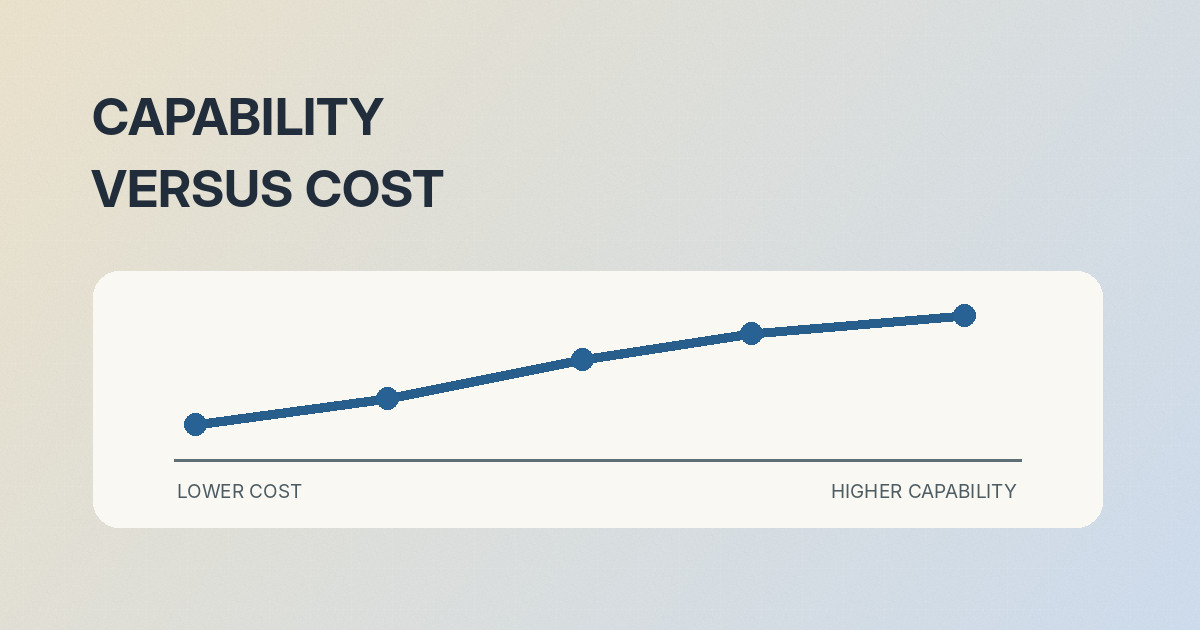
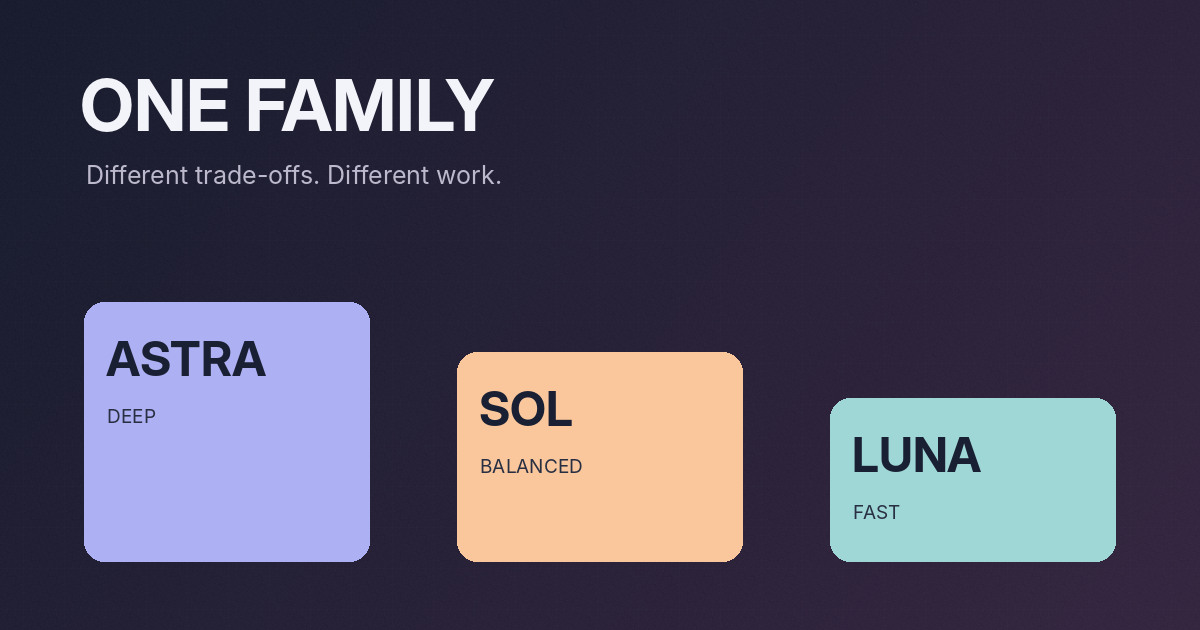
Astra, Sol and Luna illustrate why model selection is becoming a workload decision rather than a simple ranking. The story below separates the announcement from its broader implications and limitations.
Three things to know
- 01OpenAI expanded its GPT-6 family with Sol and Luna in September 2026.
- 02The models target different balances of capability, latency and cost.
- 03The best model choice depends on the job, its consequences and the acceptable budget.
The original OpenAI announcement is linked below and is dated 2026-09-22. This article distinguishes that primary-source record from editorial interpretation. See the announcement
No single tier is ideal for every workflow.
What does that actually mean?
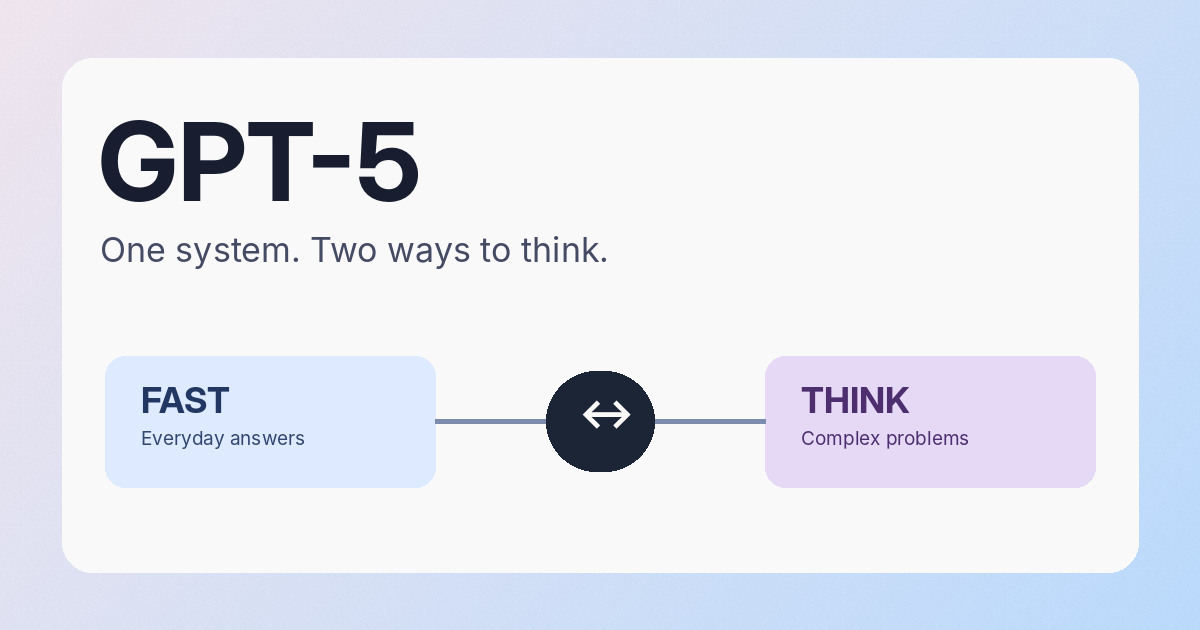
A team may use a faster model for routine responses and a more deliberate one for complex analysis, just as it uses different tools in a workshop.
What actually happened
OpenAI expanded its GPT-6 family with Sol and Luna in September 2026. The models target different balances of capability, latency and cost.
The family design creates more than a simple ladder of model sizes. It asks developers to balance reasoning depth, response speed, budget and system-level safety requirements.
Why this matters
Different tasks have different failure costs. A short classification job may benefit from a compact, inexpensive model, while safety-critical analysis may justify greater reasoning depth and human oversight.
Routing work between tiers introduces its own complexity. Teams must know when escalation is required, how a smaller model signals uncertainty and who is accountable for critical decisions.
What to be careful about
Performance and pricing are product claims that may change. Choosing only by a public leaderboard risks overlooking reliability on the specific task.
What to watch next
Create a small test set of real tasks, measure completion quality and latency, and route jobs according to the minimum capability they genuinely require.
Start by categorizing jobs by consequence and complexity, then compare accuracy and total cost across available model choices.
The practical consequence
A customer-facing assistant might prioritize fast responses, while scientific research or architecture reviews may allow more time for careful analysis. A family of models offers choices for those different conditions.
Organizations should define their quality threshold and budget before selecting a model. The useful question is what improves the task, not simply which model has the more impressive label.
A question worth asking
Could the system make the right model choice without concealing trade-offs from the user?
A useful way to assess the announcement beyond the headline.Read further
Original announcements and independent coverage, linked directly for closer reading.